Best Chest Protector for Surron & Talaria: Roost vs Full Suit
A roost guard and a full pressure suit protect very different things. Here's how to choose between four catalog options based on the terrain you actually ride.
Disclosure: This article contains affiliate links. If you buy through them we may earn a commission at no extra cost to you.
Do you need a chest protector for riding a Surron or Talaria?
Yes, if you ride anywhere with roost, low branches, or a realistic fall risk — but which one depends on the type of protection you need. A simple roost guard, like the Fox Racing R3, is a lightweight plastic shell that deflects rocks and debris thrown up by other riders' tires; it's the right call for most casual trail riders on a Surron or Talaria. A full pressure suit, like the Alpinestars Bionic Action, adds impact-rated back, shoulder, and elbow protection in one connected garment; it's the better call if you ride more aggressively, jump, or ride in tighter groups where fall risk from other riders is higher. The decision factor is fall risk versus roost risk — roost guards address the second, pressure suits address both, at the cost of more weight and heat.
Roost guards: lightweight, deflection-only
No spam. Unsubscribe anytime.
A roost guard is essentially a hard plastic chest and shoulder shell held on with straps, sized to deflect rocks, gravel, and branch strikes rather than absorb a crash impact. The Fox Racing R3 and the Fox Racing RaceFrame Roost both fall in this category — light, well-ventilated, and easy to wear under a jersey without feeling bulky. These are the right pick for riders who mostly worry about roost from riding partners and incidental branch contact on tight single-track, which describes a lot of typical Surron and Talaria trail use.
Full pressure suits: impact protection, more coverage
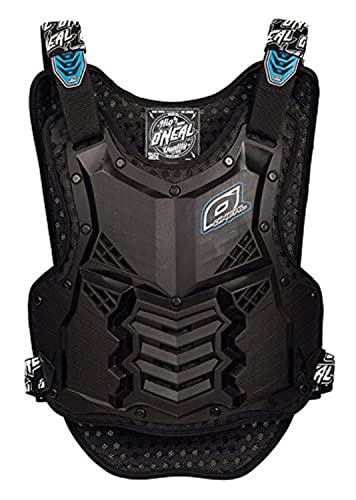
The O'Neal Holeshot and the Alpinestars Bionic Action step up to CE-rated (or CE-adjacent) impact protection at the back, shoulders, and elbows, connected into a single suit rather than a standalone chest plate. Per the Snell Memorial Foundation's general guidance on protective gear, impact-absorbing foam and rigid inserts work by spreading and slowing the force of a fall across a wider area and longer time window than an unprotected fall — the same principle behind helmet foam, just applied to the torso and joints. If you ride more aggressively — jumps, faster technical terrain, or group riding where getting clipped by another rider is a real possibility — the extra coverage of a full suit is worth the added weight and heat versus a roost-only guard.
| Protector | Type | Coverage | Approx. Price | Best For |
|---|---|---|---|---|
| Fox Racing R3 | Roost guard | Chest, shoulders | ~$92 | Lightest option, casual trail riding |
| Fox Racing RaceFrame Roost | Roost guard | Chest, shoulders, back panel | ~$112 | More back coverage, still light |
| O'Neal Holeshot | Pressure suit | Chest, back, shoulders, elbows | ~$81 | Best value full-coverage option |
| Alpinestars Bionic Action | Pressure suit | Chest, back, shoulders, elbows | ~$120 | Most complete protection, premium fit |
A roost guard deflects debris; a pressure suit absorbs a fall — decide which risk you're actually riding into before you buy.
Fit and ventilation for a lighter, quieter bike
Surrons and Talarias run without the heat radiating off a combustion engine, which sounds like an advantage for wearing more gear — but riders still report that a full pressure suit in warm weather adds meaningful heat load over a multi-hour ride, since there's no engine-bay airflow trick to offset it either way. Try the suit on over the base layer and jersey you'll actually wear, not just a t-shirt in the store, and check that the shoulder caps don't restrict arm movement when you mime a braking or steering motion — a chest protector that limits your reach to the bars is a hazard of its own.
If you're assembling a complete protective kit rather than buying pieces one at a time, chest protection pairs naturally with glove and boot decisions — see our best gloves for electric dirt bikes and best boots for Surron MX and enduro riding guides for the rest of the kit. And if you're outfitting on a tight budget, the Surron accessories under $50 roundup covers where to trim cost without cutting corners on the highest-consequence items.
Sizing note
Chest protectors are sized by torso measurement (chest circumference, sometimes with a separate height range), not by the S/M/L convention you'd use for a jacket — check the specific brand's size chart before ordering, since fit varies meaningfully between the roost-guard and pressure-suit categories covered here.
Layering under a jersey
Most riders wear a chest protector directly over a base layer or thin jersey rather than bare skin, both for comfort and because a small amount of fabric between skin and hard plastic reduces chafing on longer rides. If you're stacking a pressure suit under a jersey, size up slightly from your bare-torso measurement to account for that layer — a suit sized exactly to bare-skin measurements often ends up uncomfortably tight once a base layer is added underneath, which is a common first-order mistake for riders buying protective gear for the first time.
The bottom line
Match the protector to the risk, not the price tag: roost guards like the Fox Racing R3 → and the Fox Racing RaceFrame Roost → are the lightest, most breathable options for casual trail riding, while the O'Neal Holeshot → and Alpinestars Bionic Action → add real impact protection for riders who push harder or ride in closer groups.
Affiliate Disclosure