Sur-Ron Belt to Chain Conversion: Is It Worth It?
The stock Sur-Ron belt drive is smooth and quiet, but rocks, mud, and hard off-road launches shred its teeth fast. Here's the full case for switching to a 420 chain.
Disclosure: This article contains affiliate links. If you buy through them we may earn a commission at no extra cost to you.
Should You Convert Your Sur-Ron From Belt to Chain?
For riders who stay on smooth trails and pavement, the stock Gates-style belt is fine and most owners never touch it. But if you ride rocky, muddy, or root-heavy terrain — or you launch hard from a stop repeatedly — a 420 chain conversion is worth it. The belt's small carbon-fiber teeth shear off under repeated shock loading and impact debris in a way a hardened steel chain simply shrugs off. The tradeoff is noise (a chain is audibly louder) and a small amount of added maintenance (lubing and tensioning) versus the belt's near-zero upkeep. Most aggressive off-road riders who've worn through two or three belts end up converting once and staying converted. Casual riders on groomed trails rarely need to bother.
Why Belts Fail Off-Road in the First Place
No spam. Unsubscribe anytime.
The stock belt on a Sur-Ron Light Bee or X is a toothed polyurethane/carbon-fiber composite, similar in concept to a car's timing belt. It's quiet, doesn't need lubrication, and transmits power cleanly under steady load. The problem is that it's not designed to survive:
- Rock strikes that chip or shear teeth
- Sand and grit working into the tooth profile and grinding it down
- Repeated wheelies and hard launches that put shock load through the belt rather than a smooth power curve
- Water crossings that can cause slip under load
Once a belt starts skipping teeth, riders describe a distinctive shudder or slip under acceleration — a strong sign it's time to inspect the belt for missing or rounded teeth. Riders consistently report in Sur-Ron forums that trail and moto-style riding chews through a belt in a fraction of the miles a street-only rider gets. Sur-Ron's own service literature calls for regular belt tension and wear checks, which is itself a tell that belt life is finite under load. For scale, Sur-Ron's spec sheet lists the Light Bee X at roughly 110 lbs curb weight with peak motor output in the 6 kW range — a small, torquey package that puts real shock loads through a belt every time a rider launches hard off-road.
What a Chain Conversion Actually Involves
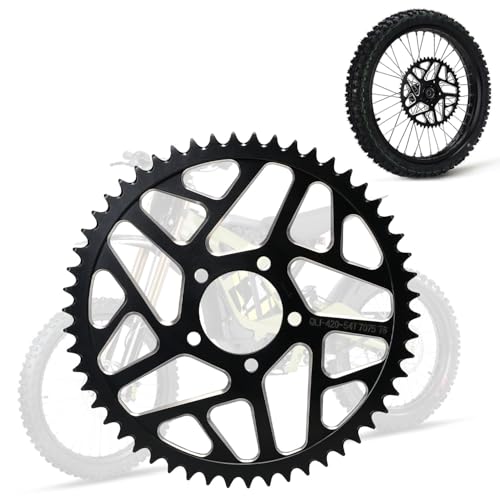
A belt-to-chain conversion swaps the stock belt pulley system for a 420-pitch chain and matching front/rear sprockets. This isn't a bolt-in for every stock wheel — most kits replace the rear pulley with a sprocket carrier and require a corresponding front sprocket at the motor output. Chain conversion kits from off-road-focused vendors (shops like Luna Cycle and Dirty Bike Parts sell full kits) typically include the front and rear sprockets, chain, and master link, sized to keep your gearing close to stock unless you intentionally change tooth counts.
Once you're on a chain-and-sprocket setup, you also open the door to gearing changes — something belts don't allow nearly as easily. That's the real long-term upgrade path: chain first, then dial in your tooth count for how you actually ride. See our sprocket gearing guide for the tradeoffs between a 48T, 54T, and 58T rear sprocket.
219 vs. 420 Chain: Which Pitch Matters
Most Sur-Ron and Talaria conversions land on 420-pitch chain because it matches the torque and speed range of these bikes almost exactly — it's the same pitch used on small-displacement dirt bikes and pit bikes for decades, so parts availability and chain strength are both well proven. A 219 chain (thinner, lighter, common on some e-bike-class builds) shows up on lower-power builds, but for a Light Bee X or Ultra Bee pushing real off-road torque, 420 is the more durable, more available choice. If you're shopping components for the swap, this is also the point to think about sprocket material — 7075 aviation aluminum rear sprockets shed rotating weight versus steel without giving up much durability for this power range.
A worn belt that's skipping teeth under load is more dangerous mid-trail than a chain that needs a mid-ride tension check.
Once you're running a rear sprocket, matching it to a well-built kit like the Warp 9 Sur-Ron/Talaria sprocket keeps the whole drivetrain in one trusted ecosystem. If you want to go lighter on the rotating mass, the 7075 aviation-aluminum 54T rear sprocket is the common upgrade pick once you've already committed to chain.
Maintenance Reality After the Swap
A chain needs what a belt never did: periodic lube, tension checks, and eventually replacement as it stretches. Budget for a quick tension and lube check every few rides if you're riding dusty or wet conditions — sand is abrasive on an exposed chain in a way it never touches a sealed belt. In exchange, you get a drivetrain that survives rock strikes, water crossings, and hard launches without the sudden failure mode belts are known for. Some riders pair the conversion with a skid plate upgrade at the same time, since a chain conversion is often done alongside broader off-road hardening of the bike. For more on protecting the underside of the bike during this kind of build, see our skid plate and controller protection guide.
The Bottom Line
If your riding is pavement and groomed trail, the stock belt will likely outlast your interest in touching it. If you're riding rocks, sand, mud, or launching hard and often, a 420 chain conversion removes the single most common off-road failure point on a Sur-Ron drivetrain, and it opens the door to gearing changes the belt never allowed.
Affiliate Disclosure